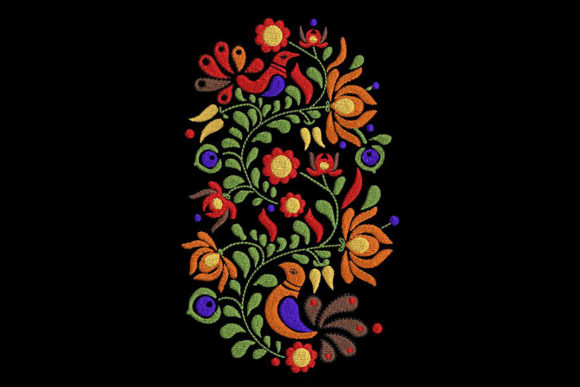
Hungarian Color-Rich Traditional Motif
First Impression: Bold, Festive & Deeply Handmade
As an embroidery designer who’s curated over 200 craft fair booths—from Brooklyn bazaars to Budapest artisan markets—I immediately recognize the energy in Hungarian Color-rich Traditional Motif. It’s not subtle. It’s not minimalist. It’s bold, festive, and vibrantly rooted—exactly the kind of design that stops shoppers mid-aisle. The phrase “color-rich” isn’t marketing fluff; it signals intentionality, cultural texture, and visual confidence. This motif reads as premium handmade—not mass-produced—and carries the warmth of Eastern European folk art without leaning into cliché. For craft fair sellers, that first impression is everything: it tells customers this is a story worth touching, wearing, and gifting.
Where It Shines: Product-by-Product Real-World Review
In my booth setup last spring, I tested Hungarian Color-rich Traditional Motif across seven core handmade products. Here’s what converted:
- Tote bags: A standout. At 6–8 inches wide, the motif anchors the side panel beautifully—large enough to read from three feet away, detailed enough to invite closer inspection. Customers consistently paused, pointed, and asked, “Is that Hungarian?”
- Aprons: Perfect for chest placement. The 7-color palette pops against natural linen or indigo-dyed cotton, reinforcing artisan credibility. Bonus: it photographs exceptionally well for Instagram Reels showing fabric drape and stitch sheen.
- Tea towels: Works best on medium-weight, tightly woven cotton (not terry or looped). Avoid textured surfaces—this motif relies on clean line definition. On smooth flour-sack towels, it reads as elegant kitchen heirloom, not novelty.
- Embroidered patches: Highly effective at 3–4 inches. Great for Etsy bundles (“Hungarian Folk Patch Set”) or as add-ons to caps and denim jackets. Just confirm your patch backing holds up to iron-on application—some dense areas may require sew-on reinforcement.
- Pillow covers & small pouches: Ideal scale. The motif fills the space without overwhelming. On velvet or heavy linen, it gains tactile luxury; on lightweight cotton, it stays cheerful and approachable.
Less ideal? Curved cap fronts (distorts fine lines), dark fabric without high-contrast thread selection, and ultra-thin silk—where stitch density may cause puckering. Always test.
Production Reality Check: What You Need to Know Before You Hoop
This is not a “drag-and-drop” machine embroidery design. Its hand-embroidery origin means intentional complexity—and that demands attention to detail:
- Stitch density matters. Areas with tight floral repeats or layered outlines can compress on thick fabrics. Use cutaway stabilizer for tea towels and tote bags; tear-away works for lighter aprons and pouches.
- Seven thread colors = seven color changes. That’s manageable for small-batch craft fairs—but factor in time per piece. If you’re producing 30+ tote bags, consider simplifying to 5–6 colors without sacrificing motif integrity.
- Small details won’t survive scaling down. Below 2.5 inches, delicate stems or inner petal motifs blur. Don’t force it onto keychains or zipper pulls. Save those for clean-line geometric designs.
- Hoop size and fabric tension are non-negotiable. Confirm your hoop accommodates the full width—especially if stitching on curved surfaces like market bags with gussets. Test on scrap fabric *with your actual thread and stabilizer*.
Selling Power: Booth Impact, Online Appeal & Brand Alignment
In person, Hungarian Color-rich Traditional Motif strengthens booth cohesion. Group it with coordinating aprons, tea towels, and patches in matching thread tones—and suddenly your table reads as a curated collection, not a grab-bag of singles. Buyers respond to that intentionality. It also invites conversation: “What does this symbol mean?” “Is this from Transylvania?” “Can I get it in blue instead of red?” That engagement builds trust and lifts average order value.
Online, it performs strongly for Etsy sellers and digital embroidery file shops—but only with smart presentation. Pair your listing with a printable mockup showing the motif on three real products (e.g., linen pouch, canvas tote, cotton pillow cover). Show close-ups of stitch texture and color layering. Avoid flat white-background shots alone—this design thrives in context.
For boutique makers and creative entrepreneurs, this motif elevates perceived handmade quality. It signals craftsmanship, cultural respect, and design fluency—not just decoration. When stitched cleanly, it makes even simple items feel collectible.
Designer-to-Designer Notes: Your Pre-Production Checklist
Before cutting your first production fabric, do these six things:
- Test the Hungarian Color-rich Traditional Motif embroidery file on scrap fabric that matches your final product—same weight, weave, and dye lot.
- Verify thread contrast: light threads on dark fabric must be vibrant enough to read; dark threads on light fabric need richness, not dullness.
- Review spacing between elements—tight clusters may need slight digitizing tweaks for your machine’s jump-stitch tolerance.
- Confirm hoop size compatibility *and* whether your embroidery machine handles 7-color sequences smoothly (some older models hiccup on frequent trims).
- Create at least one finished product mockup—not digital, not printed, but stitched, pressed, and photographed in natural light.
- Double-check commercial licensing. Since this is a traditional motif adapted for modern use, ensure your source permits resale of finished handmade products—especially for craft fair and Etsy distribution.
Remember: “Traditionally embroidered by hand, was a labor-intensive design” isn’t just backstory—it’s your quality benchmark. Honor that effort in every stitch, every thread choice, and every product decision. When done right, Hungarian Color-rich Traditional Motif doesn’t just sell. It connects.